
When charged with criminal trespassing in Las Vegas, having knowledgeable and experienced representation can make a significant difference. Miley Law Firm brings more than 20 years of criminal defense experience to cases involving Nevada trespass laws and the Las Vegas court system. Our criminal defense team takes a detailed and strategic approach to handling a variety of trespass cases, from simple misunderstandings to complex allegations.
Understanding Nevada Trespass Laws Under NRS 207.200
Navigating Nevada's trespassing laws can be challenging, especially if you've been charged with violating them in Las Vegas. Trespassing laws are governed under Nevada Revised Statutes (NRS) 207.200, which defines trespassing as entering someone else's property without their permission or remaining on the property after being asked to leave.
Understanding these regulations is critical, as cases of trespassing often involve nuances and technicalities that require careful examination. Knowing your rights and the specifics of the law can help you better respond if accused of trespassing.
What Is NRS 207.200?
NRS 207.200 makes it a misdemeanor to enter or remain on another person’s land or in another person’s building under circumstances not amounting to burglary when either of two theories applies:
- The person entered with the intent to vex or annoy the owner or occupant, or with the intent to commit an unlawful act.
- The person willfully entered or remained after being warned not to trespass by the owner or occupant within the preceding 36 months.
The warning-based provision previously used a 24-month lookback period. It now applies to warnings issued during the preceding 36 months.
Two Ways Trespassing Is Charged in Nevada
Nevada trespass cases generally proceed under one of two theories. In an intent-based case, the prosecutor must prove the person entered with an intent to vex or annoy an owner or occupant, or to commit an unlawful act. In a warning-based case, the focus is whether the person received a qualifying warning and then willfully entered or remained on the property within 36 months.
Intent-Based Trespass Allegations
An intent-based trespass case does not necessarily depend on a prior verbal warning, a written exclusion notice, or posted signs. Instead, the prosecution must attempt to prove that the defendant entered someone else’s property with the intent to vex or annoy the owner or occupant, or to commit an unlawful act.
The difference between an unwelcome visit and a criminal act can depend on the surrounding facts. Text messages, witness statements, surveillance footage, prior communications, and the reason for being on the property may all matter.
Warning-Based Trespass Allegations
A warning-based trespass case usually turns on notice. The State must show that the defendant was warned not to trespass and then willfully went onto or remained on the property within the statutory 36-month period.
For example, a person who receives a written casino exclusion notice and later returns to that same property may face a trespass accusation. However, the defense may examine whether the notice identified the correct person, covered the specific property involved, was properly communicated, remained valid, and can be reliably proven in court.
What Counts as a Valid Warning
Nevada law recognizes several ways a property owner or occupant may provide sufficient notice against trespassing. Depending on the property and circumstances, a valid warning may involve:
- Fluorescent orange paint placed in the manner required by statute
- Fencing around the area
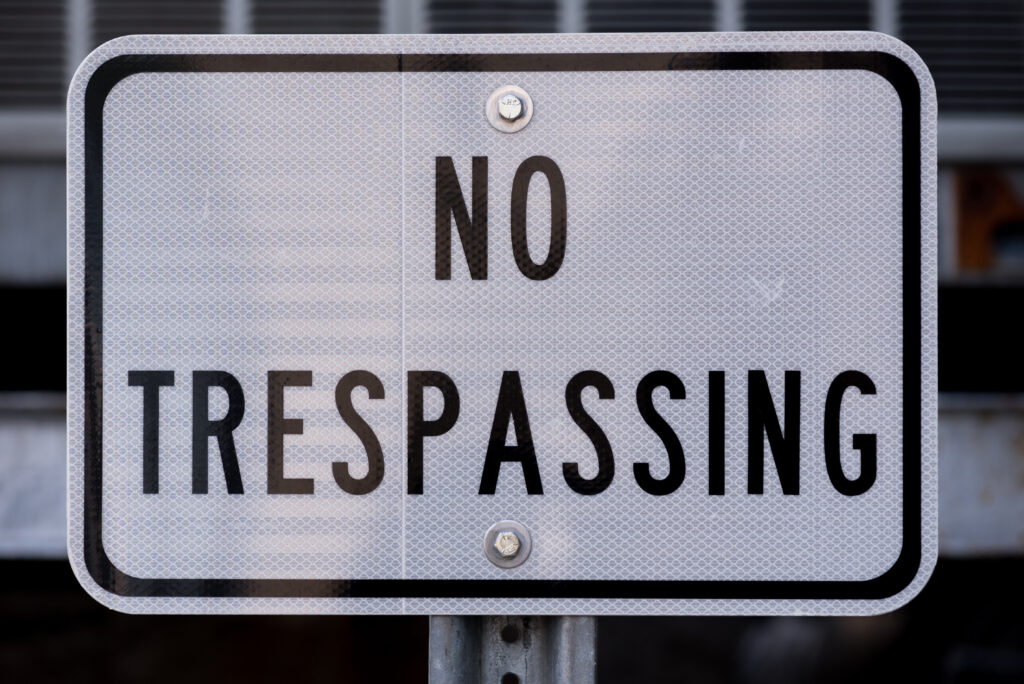
- “No Trespassing” signs or similar notices
- Cultivated land
- An oral demand to leave made by the owner or occupant
- A written demand to leave made by the owner or occupant
For signs to qualify as statutory notice, NRS 207.200 sets placement requirements. Signs generally must be positioned so that a person standing next to one sign has another sign within direct line of sight, with no more than 500 feet between signs, and signs must also be placed at property corners or near boundary corners. The statute also recognizes fencing, cultivated land, and specific fluorescent-orange-paint marking methods as forms of warning.
A warning can also be personal. An owner or occupant may orally or in writing direct a guest to leave the land or building. That fact is especially relevant in Las Vegas casino, hotel, retail, and apartment-complex cases.
Whether notice was legally sufficient is often a fact-specific question. Miley Law Firm can assess the alleged warning, any available body-camera footage, security reports, surveillance video, photographs, written notices, and witness accounts.
Las Vegas Casino and Hotel Trespass Bans
Casino and hotel trespass accusations are common in Las Vegas. A property may ask a patron, guest, visitor, or former guest to leave for a wide range of reasons, including a security concern, an alleged rules violation, a dispute with staff, suspected misconduct, intoxication, or conduct the property considers disruptive.
In many cases, hotel or casino security gives a person a written exclusion notice, sometimes called a trespass notice or trespass warning. The notice may state that the person is prohibited from returning to a particular casino, hotel, resort, or related property for a specified period.
If the person later returns to a property after receiving a valid warning, the property may contact law enforcement and the person may face a criminal trespass allegation. Whether the State can prove the charge depends on the notice, identity evidence, the circumstances of the return, and other facts.
These cases are not always straightforward. A casino or hotel exclusion does not automatically establish criminal trespass. Important questions may include:
- Whether the person actually received a verbal or written exclusion notice
- Whether the notice clearly identified the person and the property covered
- Whether the person was correctly identified when they allegedly returned
- Whether they knowingly entered a restricted area or reasonably believed they were permitted to be there
- Whether security gave them a reasonable opportunity to leave
- Whether surveillance video, security records, and witness accounts support the allegation
A casino’s decision to exclude someone is not the same thing as proof beyond a reasonable doubt of criminal trespass. Miley Law Firm can review the notice, security reports, video evidence, and other facts to pursue a practical resolution and seek to minimize the potential effect on your record.
Penalties for Trespassing Offenses in Nevada
While trespassing might sound minor, the consequences can vary based on the alleged conduct and any aggravating circumstances. Standard trespass under NRS 207.200 is generally a misdemeanor, but related allegations can result in more serious charges.
Potential penalties may include:
- Standard criminal trespass: A misdemeanor punishable by up to 6 months in jail, a fine of up to $1,000, or both. A conviction can also create a criminal record that may affect employment, housing, education, and future background checks.
- Trespass involving alleged peering or spying with a camera: Simply having a phone or camera does not automatically enhance an ordinary trespass charge. However, if the State alleges a person entered property to secretly conceal themselves and peer, peep, or spy into a dwelling, possessing a camera, video camera, or another recording device can result in a gross misdemeanor charge under NRS 200.603. A gross misdemeanor can carry up to 364 days in jail and a fine of up to $2,000.
- Trespass involving alleged peering or spying with a deadly weapon: Under NRS 200.603, a person who knowingly enters another person’s property or premises with the intent to secretly conceal themselves and peer, peep, or spy through a window, door, or other opening of a dwelling, while possessing a deadly weapon, may face a category B felony charge. Potential penalties include 1 to 6 years in prison and a fine of up to $5,000.
- Other aggravating circumstances: Allegations involving burglary, stalking, threats, assault, property damage, or an intent to commit another crime can lead to separate and more serious charges. A documented casino or hotel exclusion notice, prior warnings, or entry into a secured area may also affect the evidence available, the prosecutor’s charging decision, and potential case resolution.
A prior trespass allegation does not automatically turn a new NRS 207.200 case into a gross misdemeanor or felony. Miley Law Firm can review the warning or exclusion notice, surveillance evidence, police reports, and other facts to identify potential defenses and pursue the most favorable available resolution. Call 702-942-0600 or contact Miley Law Firm to discuss a trespassing charge in Las Vegas.
Potential Penalties for Juveniles Accused of Trespassing
Juveniles are not immune to trespass laws. While penalties often include mandatory community service, fines, or educational programs focused on legal behavior, a conviction could still appear on their record. Miley Law Firm works to minimize the long-term impact of a juvenile trespass allegation by exploring available options such as diversion, counseling, community service, or other appropriate resolutions.
Common Defenses Against Nevada Trespassing Charges
A trespassing accusation does not automatically establish criminal liability. The available defense depends on the charging theory, the alleged warning, the property involved, and the evidence the State can present. Potential defenses may include:
- Insufficient notice: In a warning-based case, the State may be unable to prove that a qualifying warning was provided within the preceding 36 months. The issue may involve signage, fencing, property markings, a verbal demand, a written exclusion, or whether the warning was adequately communicated.
- Consent or lawful authority to enter: Permission from an owner, occupant, tenant, employee with authority, or another authorized person may undermine a trespass allegation.
- Mistaken identity: In casinos, hotels, retail locations, and other high-traffic settings, surveillance footage, security records, witness accounts, or an alibi may raise questions about whether the accused person was actually involved.
- State cannot prove required intent: In an intent-based case, the prosecution must prove that the person entered with the intent to vex or annoy the owner or occupant, or to commit an unlawful act. An innocent purpose, misunderstanding, or lack of the alleged intent may support the defense.
- Insufficient evidence: Security reports, police narratives, exclusion notices, body-camera footage, and surveillance video may be incomplete, inconsistent, or unreliable.
Miley Law Firm can evaluate the facts, identify weaknesses in the State’s evidence, and pursue the strongest available defense strategy.
How Trespassing Cases Typically Resolve in Las Vegas
No lawyer can promise a particular outcome, and the resolution of a trespass case depends on the facts, the available evidence, prior history, the prosecutor, and the court. Still, many first-time or lower-level allegations may be resolved without the maximum penalties.
Possible outcomes can include:
- Dismissal when evidence is weak, the warning cannot be proven, the accused had permission, or the State cannot establish the required intent
- Reduction to a less serious offense when appropriate
- A negotiated resolution involving community service, classes, counseling, or other conditions
- Diversion or a deferred-type resolution when available and appropriate
- A civil compromise in limited circumstances, where legally available and supported by the facts
- Trial when a fair resolution cannot be reached
Early legal representation matters. Evidence can disappear, casino or retail surveillance footage may be overwritten, and a prompt defense investigation can preserve information that supports your account.
Why Choose Miley Law Firm for Trespassing Defense
Trespass laws in Las Vegas are often applied in fast-moving situations involving security staff, casino personnel, police officers, property managers, or private citizens. An effective defense requires more than a general understanding of criminal law. It requires familiarity with local court procedures, the evidence commonly used in these cases, and the practical paths to a favorable resolution.
Miley Law Firm provides focused criminal defense representation backed by more than 20 years of experience serving Nevada clients. Attorney Edward R. Miley brings meaningful local perspective to criminal cases, including service as a Justice of the Peace Pro Tempore for Las Vegas Justice Court from 1999 through 2003. He is licensed in Nevada, California, and Texas, as well as the Ninth Circuit Court of Appeals, and serves as an adjunct professor at the University of Nevada, Las Vegas.
Clients choose Miley Law Firm for:
- More than 20 years of criminal defense experience
- A strong Las Vegas and Clark County court presence
- Knowledge of Las Vegas Justice Court procedures and local criminal practice
- Thorough case preparation and strategic negotiation
- Trial-ready advocacy when a negotiated outcome is not appropriate
- Clear, straightforward communication about the available options
Miley Law Firm approaches each case with the preparation, care, and determination needed to safeguard a client’s rights and future.
Speak With a Las Vegas Criminal Trespass Lawyer
If you or a loved one has been charged with trespassing in Las Vegas, don’t face it alone. Trespassing charges can have long-lasting consequences, but Miley Law Firm is here to help mitigate those risks. From understanding the laws to building a strong defense strategy, our team is ready to guide you every step of the way. Contact us today at 702-942-0600 to discuss your trespassing charge.
Nevada Trespassing FAQs
What constitutes trespassing under Nevada law?
Under NRS 207.200, criminal trespass may be charged when a person enters another person’s land or building with the intent to vex or annoy the owner or occupant, or to commit an unlawful act. It may also be charged when a person willfully enters or remains after receiving a qualifying trespass warning within the preceding 36 months. Posted signs, fencing, fluorescent orange paint, cultivated land, and personal oral or written warnings may all be relevant to whether adequate notice was provided.
Does a verbal warning count as trespassing notice in Nevada?
Yes. NRS 207.200 recognizes an oral demand by the owner or occupant for a guest to vacate the land or building as a sufficient warning against trespassing. The facts still matter, including who gave the warning, whether that person had authority, what was said, whether the person had time to leave, and whether the warning can be proven.
What if I didn't know the property was private?
Not knowing a property was private may be relevant to the defense, especially if signs were unclear, boundaries were confusing, access appeared open to the public, or you had reason to believe you had permission to be there. However, the answer depends on the charging theory and the specific evidence. A criminal trespass lawyer can review the circumstances.
What are the penalties for a trespassing conviction?
Typically, trespassing in Nevada is considered a misdemeanor. Penalties may include fines up to $1,000, potential jail time of up to 6 months, and a criminal record. The severity of the penalty may vary based on the specifics of the incident, such as any prior offenses or the location of the violation.
Is trespassing considered a misdemeanor or felony in Nevada?
Standard criminal trespass under NRS 207.200 is generally a misdemeanor. A person may face a gross misdemeanor or felony charge when the alleged conduct supports a separate offense, such as peering or spying into a dwelling while possessing a recording device or a deadly weapon. The charge depends on the specific facts and the statute prosecutors allege was violated.
Can a trespassing charge be dismissed?
It may be possible to seek dismissal when the evidence is insufficient, the State cannot prove a valid warning or the required intent, the accused had permission to enter, or identification evidence is unreliable. Whether dismissal is available depends on the facts, the charge, and the evidence in the case.
Do I need to go to court for a trespassing charge?
Not always. For some minor trespassing charges, your attorney may be able to negotiate with prosecutors and handle the legal process on your behalf. However, if the case goes to trial or has higher stakes, appearing in court may be necessary.
Can a trespassing conviction be sealed in Nevada?
A standard misdemeanor trespass conviction may generally become eligible for record sealing after one year from the date of release from actual custody or the date the person is no longer under a suspended sentence, whichever is later. Dismissed, denied, or acquitted misdemeanor cases may be eligible without a waiting period. Eligibility depends on the final charge and disposition, so it is important to obtain advice based on the specific case record.
Record sealing is not automatic. A petition must generally be filed in the court with jurisdiction over the case, and the process has procedural requirements. Learn more about record sealing in Nevada.
How can a lawyer help with my trespassing case?
A lawyer can examine the charging theory, alleged warning or exclusion notice, surveillance footage, police and security reports, witness accounts, and any evidence of permission to enter. Miley Law Firm can also communicate with prosecutors, appear in court, negotiate when appropriate, and prepare the case for trial when necessary.